Construction company Austria: quality and 30-year guarantee
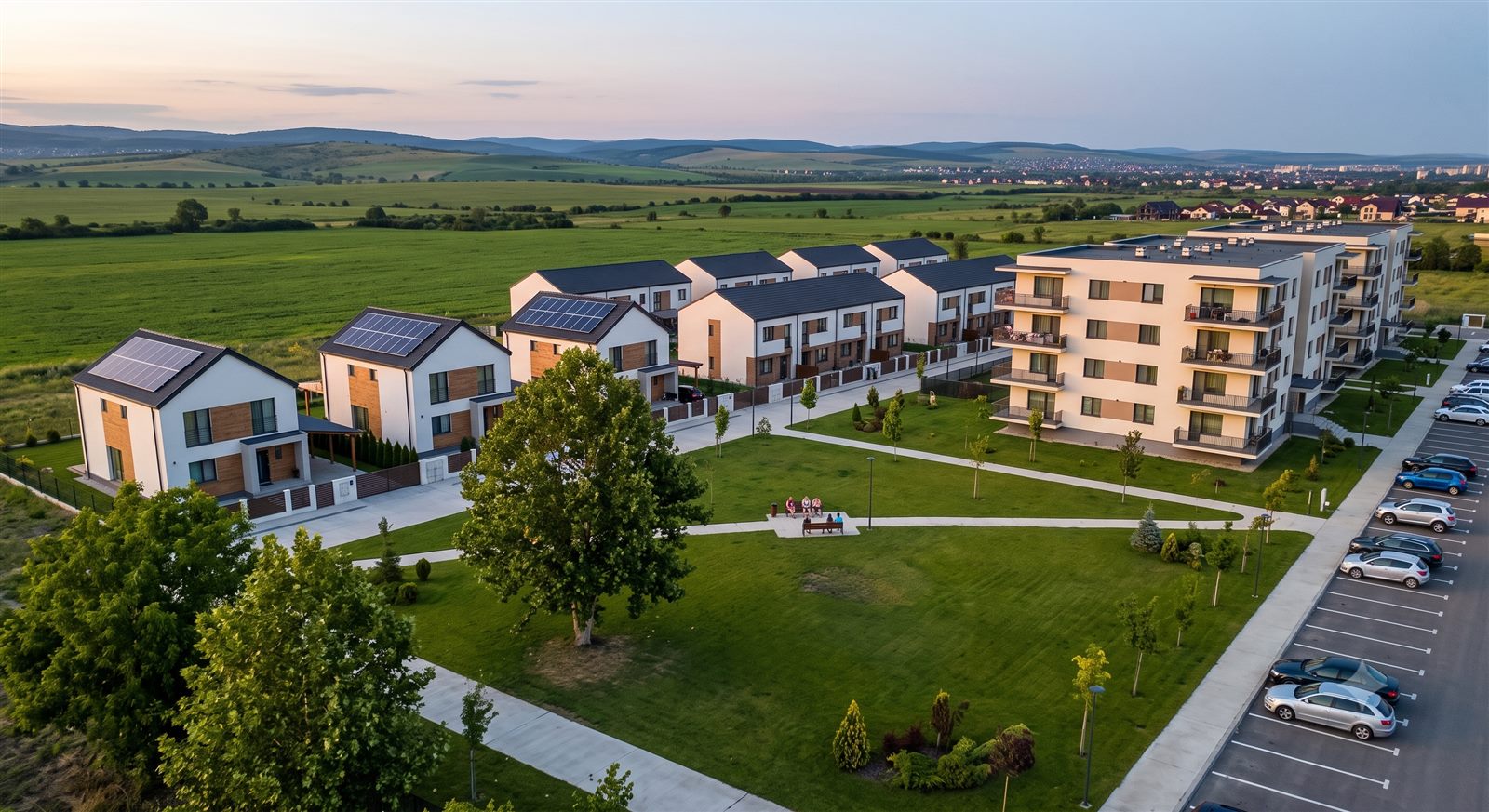
Building a home in a foreign country quickly becomes a major source of stress. You navigate local regulations, language barriers, and a culture of technical rigour you cannot ignore. If you're looking for a construction company in Austria, you need to understand that here, quality is not optional — it's a strict legal requirement.
A minor error in design or material selection can lead to a failed final handover. Our experience shows that the success of any project in Linz, Salzburg or Vienna depends on how well you integrate technical expertise with local bureaucracy. You cannot treat building a house in Austria as a simple service purchase. You need coordination that combines structural engineering with compliance to OIB regulations.
Why you must check the track record of any construction company in Austria
In states such as Upper Austria or Vienna, you cannot start a construction site without an entity holding Baumeister certification. This licence is not just an academic diploma — it's a certificate of professional competence that makes the contractor civilly and criminally liable for structural stability.
When looking for a construction company in Austria, the first step is to verify whether your partner appears in the official WKO register. Without this validation, you risk having your project blocked by local authorities at the Bauabnahme (final inspection) stage. From our experience on sites in Salzburg, missing technical documentation compliant with ÖNORM standards invariably leads to extra costs and delays measured in months.
The difference between Bauanzeige and Baubewilligung
Austrian bureaucracy classifies works by complexity. You need to know exactly where your project falls:
Bauanzeige (construction notification): applies to minor structural changes or renovations that don't change the building's use. A simplified procedure, but one that still requires clear plans filed with the Bauamt. Baubewilligung (building permit): mandatory for new buildings or major extensions. This involves a thorough review of the plans by authorities regarding fire protection, energy efficiency, and distance from neighbouring properties.
Ignoring these distinctions will cost you dearly. A capable company handles the entire file, taking over communication with local officials to spare you this stress.
How to check whether a construction company in Austria will charge unexpected extra costs
Financial transparency is where most collaborations break down. A company offering an unjustifiably low price at the bidding stage will recover the difference through "extra charges" (Nachträge).
Check whether the estimate you receive details material type and required quantities. We use laser-scanning technology to establish exact quantities before signing the contract. Here's what to look for in the offer you receive:
Geotechnical analysis: a serious company will not proceed to execution without soil testing. In areas around Vienna or Salzburg, the water table can raise foundation waterproofing costs by 10-15%. Energy efficiency standard: under the new OIB regulations, every new building must reach high efficiency thresholds. Make sure the offer includes compliant materials, such as high-density basalt wool or thermally broken window frames. Verifiable portfolio: look for concrete examples. On a reference project in Vienna's 19th district, we had to preserve the historic facade structure while integrating modern insulation. You can review the technical data sheets of the materials used to understand how we solved thermal bridging.
Execution standards and thermal efficiency
An investment in a house must pay for itself through lower running costs. In Austria, the Passivhaus standard has become the benchmark for new construction. Cutting heat loss by 40% isn't just an ecological goal — it's a financial necessity given current energy prices.
On our sites in Linz, we use C25/30 grade concrete and high-density bituminous membranes to prevent any water infiltration. Execution quality is documented digitally, through daily photo reports, so you have clear proof of what lies behind the plaster or beneath the flooring.
If you want to assess your project's feasibility, budget an average of EUR 2,000–2,500 per square metre for a turnkey execution, in line with current Austrian standards. This price should include full subcontractor management and the 30-year guarantee on the load-bearing structure.
Every detail matters, from column anchoring to the final window installation. Before signing any contract, ask to see at least one site in progress. A company that isn't afraid to show you how it works in real time is a company that understands the responsibility it carries toward you and toward Austrian law.
Frequently asked questions
What does SB Bau-Sanierung's 30-year guarantee on the load-bearing structure cover?
The guarantee covers the structural integrity of load-bearing elements, such as the foundation, columns, and beams, in the event of execution errors or non-compliant materials.
How is the budget for a turnkey house in Austria calculated, and what expenses are often overlooked?
The budget depends on floor area and finishes, but must include utility connection fees, building permits, and a 10-15% margin for the unexpected.
What is the average execution time for a single-family villa in the Linz or Vienna region?
Executing a 150-180 m² villa takes between 10 and 14 months, covering all stages from foundation to finishes.
What documents do I need to prepare to obtain a building permit in Austria?
You need a land register extract, zoning certificate, topographic plan, technical project, utility approvals, and a geotechnical study.
Do you offer consulting for the energy renovation of older buildings to reduce gas/electricity consumption?
Yes, we assess heat loss through thermal scanning and implement insulation solutions and modern heating systems for improved efficiency.